James Cook Observation of Solar Transit of Mercury

Posted by admin on January 30, 2012 under Celestial Navigation | Comments are off for this article

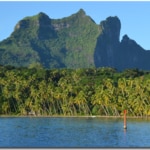
This weekend I visited a very special and historically significant celestial navigation place. It’s called Mercury Bay and it’s in the Coromandel Peninsula in New Zealand. Cooks beach lies on the edge of Mercury bay and is thus named after lt. James Cook, the famous world explorer of the 1700’s. Cook visited Mercury Bay in his ship the Endeavour between November 5th and 15th, 1769. Cook also named the bay thus because this is the place where he and his astronomer Charles Green set up to watch the solar transit of Mercury on November 9th. So why would he do this? What’s the big deal?

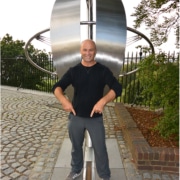
The Memorial at Shakespears Head, Cooks Beach

The Memorial at Shakespears Head, Cooks Beach

The Royal Astronomical Society knew of the coming solar transits of Mercury and Venus in 1769. With funding from the King, they sent out many people to observe these celestial events in different parts of the globe. The observations would help in determining much about distances in our solar system. Cook’s first stop was to be Tahiti to observe the Venus transit, then after that he had been directed further south to find a great southern continent that was assumed to exist. In October 1769 he came upon New Zealand whereby he waited until November 9th to observe the Mercury transit.

As a side effect of these observations, some accurate longitude information could be determined from the observation posts. In those days, calculating longitude accurately in remote locations was almost impossible because you needed to know the time in Greenwich, the 0 degree longitude datum. But with out a time piece that would stay accurate on a rolling sea how could you know the time?

In theory here’s how the longitude determination simply works. Let’s just say that the event would take place at Midnight Greenwich time. But the Endeavour’s crew observed the event to take place at noon local time. That would mean that Cook was 12 hours away from Greenwich. Since the planet rotates in 24 hours and there is 360 degrees in a circle, 15 degrees represents 1 hour.

As a quick aside explanation of that. Let’s say you know the time in Greenwich is 1 pm yet the local time where you are is 12 noon. You are 1 hour away from Greenwich and thus 15 degrees west. This is how time relates to longitude.

Thus, in the example, Cook would have been  12 x 15 = 180 degrees away from Greenwich. Cook would have gained the local time by observing the apex of the sun to obtain the local accurate noon time. Plugging in the real numbers then, the Royal Astronomical Society of England was later to determine the longitude of a place about 300 yards west of the river at the east end of Cooks beach by comparing the time of the occurrence in Greenwich and the time at Cooks beach (plus a few other factors like diameter of the earth etc). The observation place on Cooks beach is 174 deg 45 min west. Cook went on through March 1770 to draw a very accurate map of New Zealand charting most of the coastline almost exactly. Also as a result the Royal Astronomical Society was able to determine a measurement of the Earth to the Sun. Their results differ only 1/8th of 1 percent from today’s measurements. All pretty impressive I say and thus making Mercury Bay a worthy place of historical significance.


Place where James Cook observed the transit of mercury

Place where James Cook observed the transit of mercury

Several years later Cook returned to New Zealand carrying the latest technology, a chronometer. Commonly known today as a watch. The watch invention was very significant because it was immune to the rolling seas. Knowing the exact longitude, Cook was then able to reset his watch to the correct time upon arrival in New Zealand noting the daily offset in seconds the watch would have suffered on the trip between England and New Zealand. He then went on to use his watch to calculate and reposition accurately all of the Pacific islands he discovered and revisited from his previous visit, again taking into account the time offset.

View of Cooks Beach - No wonder he stayed here 10 days

View of Cooks Beach - No wonder he stayed here 10 days

The NauticEd celestial navigation course written by Captain Ed Mapes is a great start to understanding the technical details of calculating longitude using a noon shot of the sun. Take the NauticEd celestial navigation sailing course today.

One of Cook’s favorite Pacific islands besides New Zealand was Tahiti. Tropical warm waters, an abundance of fresh fruit and friendly people was one of his reasons. Speaking of Tahiti, if you obtain the  NauticEd sailing certification of  Bareboat Charter Master rank before June this year, you’re invited to get on a jet liner fly at 500 miles per hour and captain your own luxury modern sailboat using a wonderful GPS in our sailing flotilla starting June 16 this year. Can you imagine giving that invitation to Cook? Count yourself lucky, but only if you take advantage of this offer.

Visit our Sailing flotilla opportunity in Tahiti

I guess we’ll have to visit the place where he observed the Venus Transit – come join us.

What the heck? Take the plunge and a jolly good worthy life challenge – become a NauticEd Bareboat Charter Master and  Yacht Master now!

Simplistic Explanation of Latitude and Longitude Determination

Posted by admin on October 3, 2011 under About NauticEd, Bareboat Charter, Celestial Navigation, Coastal Navigation, Crew, Skipper | Comments are off for this article

The posting here is not a course in celestial navigation by any means. However it’s meant to simplify a few principles for you so that you’ll at least have some sort of celestial orientation. And… perhaps it’ll inspire you to learn the aging art.

This was written by Grant Headifen, Educational Director of NauticEd. NauticEd provides online sailing courses and Sailing Certifications accepted by charter companies worldwide.

Latitude: In the northern hemisphere, finding latitude is simple using one of the greatest gifts to human kind – The North Star. What ever angle the northern star is at from the horizon, that’s your latitude.

Imagine you’re an ant sitting on the top of an apple looking at a spot directly above you on the ceiling then the spot is 90 degrees from the surface you’re standing on. If you’re standing half way around the apple then you’d barely see the spot but it would be horizontal to the surface you’re standing on and so the spot would be at zero degrees. And if you were ¼ of the way down the apple then the spot would be at 45 degrees etc. ie the northern star is the spot on the ceiling to us.

You can also find latitude using other celestial sightings but they involve table lookups and are slightly more complicated. Not meant for this post and also note that there are a few more complicated variables not taken into account during this simplistic explanation like the height of your eyeballs above the earths surface etc etc. But at least you’ve now got the principle.

Longitude: Now this is a fun one and in an incredibly easy principle. But years ago (early 1700′s) while the principle was easy then the execution was difficult. Read on to see why.

The earth rotates through 360 degrees in 24 hours. That’s 15 degrees per hour. By convention, when the sun is at it’s highest point in Greenwich, it is noon in Greenwich. That means that at a place that is 15 degrees to the West of Greenwich the sun will be at it’s highest point one hour later. Six hours after Greenwich the sun will be at it’s highest point somewhere in over the USA and 12 hours later the sun will be at it’s highest point in New Zealand.

Animation of time zones

Animation of time zones

So if we know the time in Greenwich and sun just reached its highest point where we are then we can calculate our longitude.
Lets do a few examples. If it is 6 pm in Greenwich and the sun just peaked overhead here, then I am 6 x15 degrees to the west of Greenwich which is 90 degrees West which is right near St Louis Mo.

If the sun peaked overhead in Los Angeles what time would it be in London.?Well LA is 118.15 degrees West (from Google earth). Divide that by 15 degrees per hour and we get 7 hrs 53 minutes. Now since the times zones are created in bands this would round up to 8 hours. Thus it would be 8pm in London.

You’re sailing in the Greek islands in the Mediterranean and a little bird just told you your latitude is 34 deg 54 minutes north but failed to tell you the longitude. Fortunately you have your handy sextant and just as you take a shot, the sun just reached its apex overhead. You look at your watch and the local time is 12:10:48 pm. Where are you?

Since you’re in time zone B you are 2 hours ahead of Greenwich. Thus the time in Greenwich is 10:10:48 am. And since the sun peaked just now (=noon) then you are 12:00:00 minus 10:10:48 = 1 hour 49 minutes and 12 seconds from Greenwich. Putting this into decimal time this is 1.82 hours. Multiply this by 15 degrees per hour and we have 27.3 degrees East or 27 degrees, 18 minutes East.

You’re in the harbor north of the town of Kos on the Island of Kos.

That was incredibly easy, so why all the hoopla back in the 1700′s? The King of England even offered up a ₤10,000  reward to anyone who could solve the issue of Longitude. The above math was well known but the issue was telling the time. No one could accurately keep time at sea. After 27 years of work on the project, John Harrison, finally invented the Chronometer more commonly known as the watch. The watch was not susceptible to the sudden crashes of waves at sea and thus kept proper time.

James Cook on his second trip around the world in 1772 sailing on Rendezvous, took Harrison’s watch with initially much skepticism. Stating that he’d give it a try. After six months at sea, Cook stated that the Chronometer would almost certainly become the way of the future for Navigators. Cook then went on to reposition many of the Islands in the Pacific including Tahiti, his favorite island. His map of New Zealand astounds people even today with its accuracy.

Again there were a few simplistic assumptions taken in that explanation. But now, at least you understand the principle of longitude determination from a noon shot of the sun. You can also determine your latitude from a noon shot of the sun as well using tables and a bit of math. Again beyond this posting.

If you’d like to delve deeper into these topics, NauticEd provides online sailing lessons and an Introductory Celestial Navigation Sailing Course, or maybe you’re just happy with your handy boring ol GPS.

Yacht Club Intelligence: NauticEd Sailing School Press Release

Posted by admin on May 15, 2011 under Bareboat Charter, Celestial Navigation, Coastal Navigation, Crew, Maneuvering Under Power, Rules of Right of Way, Skipper, Storm Tactics, weather | Be the First to Comment

Imagine if you could just hang out at the yacht club every day – how much you’d learn from everyone. That’d be cool. Well … now you can!

It’s a very cool piece of technology we just installed on the NauticEd site. It’s called DisQus and the concept is based on crowd intelligence. It shows how the power of the Internet can beat out a boring ol’ book. Thousands of websites have already introduced it and it’s ideally suited for you and NauticEd.

On every page through out all of the NauticEd sailing courses you can now discuss (Disqus) the topic at hand and read what others are saying about the topic.  For example, lets say you know a few things about how to dock a boat using spring lines but are a bit confused about backing into a slip. Right in the course you can add your springing off knowledge and ask all other students their opinions on reversing. When any one comments and adds to those comments you’ll be sent an email (if you want). You can add pictures and diagrams if you want. Our part is to use the crowd intelligence to improve our sailing course material for everyone.

You can even invite facebook friends to join in on the conversation and help out.

Crowd-Intelligence with NauticEd Sailing School

Crowd-Intelligence with DisQus and NauticEd Sailing School

How cool is this? Now you’re tapping into the knowledge of thousands of other NauticEd students – wow that’s a big yacht club with a lot of combined experience. You’re not on your own any more. It’s not just us and our authors pontificating about sailing – it’s a real open discussion and conversation in real time.

But like any party or social – you can’t just stuff your mouth with cake and listen – you’ve got to add your two cents. And you can’t be rude because people are watching and the bouncers will bounce you out. So come on join in – ask questions and post your knowledge.

To kick off, I’ve gone in and asked a few questions and posted a few comments in each course topic. I invite you to join me and start new conversations. Like who gives way – the paddle board or the sailboat? Do you know the answer?

Login and give us your opinion to the Rules of the Nautical Road topic embedded in our Rules course.

And to celebrate the launch of crowd intelligence via DisQus, we’ll award a free sailing course of choice to a student randomly picked from everyone who participates in the conversations over the next week (through May 25th) . Hint, the more you talk the more we’ll notice.

We’ll see you on NauticEd.

Grant


How to Get to a Waypoint

Posted by Grant Headifen on September 11, 2010 under Bareboat Charter, Celestial Navigation, Coastal Navigation, Crew, Skipper | Be the First to Comment

Recently on our NauticEd flotilla with the Moorings to the Kingdom of Tonga we wanted to pass through the Fanua Tapu Pass which is a gap in the reef to get to the eastern islands of the Vava’u archipelago. Normally the gap is marked by a series of buoys, however the latest storm ate them.

The pass is well documented by two waypoints. Traversing using a GPS map, however, was out of the question because Tonga is one of the last places on earth to be accurately placed on the world coordinates. Yes you’re reading that right – the islands are not actually where the maps say they are and especially reefs and rocks are not where they are positioned on the maps. That’s pretty absurd for this day and age but it’s true. Call the Moorings base in Tonga for your self.

Tonga-fanua-tapu-pass

Tonga-fanua-tapu-pass

Navigation is performed using good old eyesight (some of our eyesights are older than others) coupled with map reading skills, a depth sounder and a keen watch out on the foredeck.

So anyway we had to get the first waypoint dead on to pass through the reef. The first waypoint was 18 deg 43.914 min South and 173 deg 59.12 min West. Our position was 18 deg 44.902 South and 173 deg 62.014 West.

So it’s a bit funny trying to hit a point like this because you’ve got to be able to work with a few obvious things but understanding the principles makes it much easier. First you’ve got to know which directions you need to be heading based on the hemispheres you’re in.

In the northern hemisphere to increase the latitude you’ve got to head north but in the southern hemisphere to increase latitude you’ve got to head south.

Similarly,  in the eastern hemisphere to increase longitude you’ve got to head east where as in the western hemisphere to increase longitude you’ve got to head west.

OMG how do you remember that? Especially in the heat of the moment with waves and rocks all around you and your life depending on it.

I’m sure there is a memonic for it but it’s best to understand the principle first and below is the way where I can best understand it. For me, I find that principles are better than memonics.

Imagine you’re standing on the intersection of the prime meridian (below grenwich) and the equator. You’re at 0 deg Latitude and 0 deg Longitude. Move in any distance to the North and the latitude increases North. Move any distance to the South and the Latitude increases South. Now place yourself at about 17 degrees south latitude. Move North and you’re moving towards the equator and towards 0 deg Latitude.

So in principle then, if you understand this; move towards the equator  you’re decreasing the Latitude no mater which north or south hemisphere you’re in. So in our example above our latitude was greater than the waypoint so we needed to head towards the equator. We were in the southern hemisphere so we needed to head north.

IE when dealing with latitude – just figure out if you need to head towards the equator or not. That should take care of that from an understanding principles point of view.

Longitude. Back to our Prime Meridian/Equator intersection. Looking towards the North pole, everything towards your left is West Longitude right? And everything towards the right is East Longitude. So anything from England, past the Americas and all the way around to Hawaii is West longitude. Any everything from England, past Asia and all the way to Australia and New Zealand is East Longitude. This is why the USA is known as western society and Asia is known as eastern society.

So now you just got to know where you are East or West. In Tonga we were on West Longitudes. So anything back towards the Americas or England from that point was decreasing the Longitude numbers towards the zero prime meridian in Grenwich. Which meant to get to our waypoint we had to head East to the America’s.

So overall we needed to head to the North and to the East. Next we looked at what was the relative differences between desired and present positions for latitude and longitude. The longitude difference was about 3 times that of the latitude difference. This means we needed to head more east than north.

In the old days (I mean the old old days) before longitude could accurately be determined, traders would head north from Africa and purposefully miss England far far to the west of England. Then once on the latitude (easily discovered by the angle the north star makes with the horizon) they would then travel East. This ensured they would miss all the potential dangers. Hundreds of ships were being lost due to the difficulty in accurately determining the longitude. In early 1700’s the King of England offered a 10,000 pound reward to figure out how to accurately determine Longitude. For those of you interested, watch the history channel show on this or read the book “Longitude”. Both are excellent!


So lets go back to the principle. Where ever you are you should establish this before any issues come up. IE if you’re on a bareboat charter – answer these questions before you leave the base.

Am I in the southern or northern hemishere? Then based on that, embed into your head which way do you go to increase/decrease latitudes. Should you head towards the equator or away.

Am I in Eastern Longitudes or Western Longtiudes? Then decide which continent you should head to decrease or increase longitudes.

Here’s a little test then. You’re in the Aegean Sea at:

36 deg 56 min North Latitude, 27 deg 19 min East  Longitude

you want to get to:

36 deg 57.897 min North Latitude,  27 deg 17.295 Min East Longitude.

Which way should you be heading?

Simple enough – we’re in the North Eastern hemisphere. We want to increase the latitude so we need to move away from the equator and thus head north. We also want to decrease the longitude and head towards Grenwich England which means head west.

Both are almost 2 minutes in difference and so the VERY APPROXIMATE direction should be North East. We say VERY APPROXIMATE because the latitude lines and longitude lines are not the same distance apart and vary according to latitude. The closer to the poles the closer are the longitude lines. Therefore the heading would be more north of northeast.

In this blog we’re placing quite an importance on this concept. The reason being is a funny (potentially not so funny) story attached. On the Tonga trip one of the crew was an ex Airforce Navigator. He got turned around for a second in the reef because we were heading east to reach the waypoint but his brain was telling him to head west. The reason is that he was used to Navigating around New Zealand which is in the Eastern Longitudes. Tonga is just on the otherside of the 180th Meridian in the Western Longitudes. Whoops being turned around in the middle of reefs is NOT good. There were rocks all around us and correct decisions had to be made fast.

OK and here’s a real scenario to scare you into taking this blog and the NauticEd sailing simulator serious. A family member falls overboard at night and you hit the MOB button on your hand held GPS. You’ve got the lat and long where they went over. By the time you get turned around and the sails down with all the confusion – all you’ve got is their lat and long and yours and a compass. How do you save your family member’s life?

MOB is at 16 deg 33.250 min N and 62 deg 11.501 W

You are at 16 deg 33.200 min N and 62 deg 11.595 W

Which way do you head? Quickly now the current is drifting them away from that position.

Day 4 of Introduction to NauticEd

Posted by Grant Headifen on May 15, 2010 under About NauticEd, Bareboat Charter, Celestial Navigation, Coastal Navigation, Crew, Maneuvering Under Power, Rules of Right of Way, Skipper, Storm Tactics, weather | Be the First to Comment

This is day 4 of 6 in your introduction to NauticEd International Sailing School. Watch the video and/or read the text below.

stuck in the headlightsToday we’ll help you discover which courses are best suited for you personally.

We developed a series of 10 quick questions that will easily eliminate any confusion about which course you should be taking for your own personal sailing education.

Run the personal course recommendation tool now
. You’ll save money by investing in only the courses right for you.

Getting Started with Multimedia Training

The first courses we believe that all sailors should complete no matter what their experience level is the FREE NauticEd Rules of the Nautical Road and the FREE Basic Sail Trim Course. These courses are already loaded into your curriculum.

If you’re an experienced sailor you’ll see the value in a quick refresher course. If you’re new to sailing then you’ll learn some VITAL nautical rules and sail trim knowledge.

In either case, these courses are free and thus you’ll be able to see how taking a NauticEd clinic and the associated test will work. Both are a highly graphical and fun 20 minute courses.

Complete your Navigation Rules Clinic and the Basic Sail Trim Courses now!

Then Set yourself up for a Proper Sailing Certification

If our free courses gained your confidence in us, then you may have already invested in either the full Skipper, Bareboat Charter Master or Captain’s bundle of courses. Most people do this eventually because it saves money and sets them on the right track to a proper Sailing Certification recognized by the world’s largest yacht charter companies. When you invest in a bundle you’re automatically given appropriate financial credit for any courses you’ve already taken.

Ranks and Courses

In email #2 we discussed the ranks Crew, Skipper, Bareboat Charter Master and Captain. Here’s how you work through these Ranks:

Right Now Your Rank is: [Database!Rank] – [Database!Level]


Gaining the Qualified Crew Rank
Qualified-Crew-card

Qualified-Crew-card

You are awarded the Qualified Crew Rank when you pass either the Skipper Course or the Qualified Crew Member Course and are level I experience qualified.

QUALIFIED CREW MEMBER COURSE: Learn to sail and contribute as a crew member on a modern cruising sailboat. Learn the lines, sailing terminology, sail trim and rules of the road. Estimated time: 7 hours total. Investment: $37.50.

Gaining the Skipper Rank
Skipper Card

Skipper Card

In addition to the two courses below, you must be at least Level I experience qualified.

The SKIPPER SAILING COURSE is a beginner to intermediate sailing course. It is a prerequisite to any certification and covers the fundamentals that every one must know. The total time needed to complete this course will be about 20 hours. Investment $67.00

The MANEUVERING UNDER POWER CLINIC: This is our most popular course. An absolutely essential maneuvering and docking course that will save you thousands in dents, bumps and scratches at the marina. Want to dock your boat like a pro every time? Want to impress? Take the most popular NauticEd Sailing School Course now. Estimated time: 3 hours total. Investment: $39.

The investment in the Skipper Bundle of courses is $95 instead of $106.50 a la carte.

Gaining the Bareboat Charter Master Rank
Bareboat Charter Master

Bareboat Charter Master Card


In addition to the Skipper Rank and the three courses below, you must be at least Level III experience qualified.

BAREBOAT CHARTER CLINIC
: Taking a sailing vacation? All hands on deck – this is the yacht charter sailing course for you and ALL of your crew. Make your charter sailing trip more enjoyable by getting ALL the bareboat charter tips you’ll need. Estimated time: 5 hours total. Investment: $39.

COASTAL NAVIGATION CLINIC
: Learn to navigate your sailboat. If you plan on sailing away from your home base or are taking a sailing vacation, you need this course. NauticEd Sailing School makes navigating a sailboat – a breeze. Estimated time: 10 hours total. Investment: $39.

ELECTRONIC NAVIGATION CLINIC
: This Electronic Navigation course is the world’s only true interactive course where you learn all the instruments you might have onboard a sailboat. The exercises are designed so that you actually interact with a simulated GPS chart plotter and get inside the workings to REALLY understand how to maximize the information being presented to you. With ease, you’ll implement navigation techniques like setting your autopilot to track a waypoint or tack perfectly on a layline. Estimated time: 6 hours total. Investment: $25 or FREE when you invest in the BBCM bundle.

ANCHORING A SAILBOAT CLINIC
: Whether you are sailing your own vessel in coastal waters or chartering in the Caribbean or beyond, knowing how to safely and effectively anchor is one of the most essential and liberating skills you can have. Knowing about anchors, rodes, anchorages and anchoring techniques is a prerequisite for enjoying an evening in a magically beautiful setting as well as getting a good night’s sleep while swinging from the hook. The goal of this course is to either help you get more confident using the gear you have, or to help you select new gear and understand how to deploy it correctly.  We discuss available equipment and its performance. Estimated time: 4 hours. Investment: $17

The investment in the  Bareboat Charter Master Bundle of courses is $175 instead of $226.50 a la carte


Gaining the Captain’s Rank
Captain Card

Captain Card


In addition to the BBCM Rank and the four courses below, you must be at least Level III experience qualified.

WEATHER CLINIC
: If you’re a real sailor then you need to understand and read the weather. It’s as simple as that! Written by the professionals at Clear Point Weather, this is the best weather sailing course available. Estimated time: 7 hours total. Investment: $39.

SAIL TRIM CLINIC
: Learn the true art and finesse of trimming the sails. When to adjust the fairleads, the traveler, the downhaul, the outhaul, the Cunningham, the boom vang. When leaning to sail properly, you should know what all these fine adjustments do. Estimated time: 4 hours total. Investment: $39.

STORM TACTICS CLINIC
: Even when day sailing, a storm can be upon us in minutes. Are you prepared with the knowledge now? This storm tactics sailing course will teach the essentials to keep you and your crew alive. Estimated time: 4 hours total. Investment: $39.

SAFETY AT SEA CLINIC
: Most mariners don’t realize that we never even hear about the many crews aboard vessels that had their share of problems offshore. Situations were evaluated, repairs were completed, and they made landfall quietly and efficiently – this done as a normal course of passagemaking. These able sailors had the skills, materials, and a plan to cope – having merely to carry out the work to get back on course. They understand that overcoming obstacles is a normal part of blue water sailing. Estimated time: 14 hours total. Investment: $39.

The investment in the Captain Bundle of courses is $307 instead of $357.50 a la carte.


In addition to the above courses and clinics, we offer the following:


CATAMARAN SAILING CONFIDENCE CLINIC: Converting over to a catamaran or chartering a catamaran for the first/second time? Learn the essential differences between sailing a monohull and a catamaran. This clinic will give you the confidence. It includes an interactive experiential online game to practice maneuvering in a marina. Estimated time: 3 hours total. Investment: $39.

INTRODUCTORY CELESTIAL NAVIGATION CLINIC
: If you’re in any way intrigued with Celestial Navigation, this is the best and simplest celestial sailing course available. You’ll be able to do an actual noon shot and determine your position. Estimated time: 5 hours total. Investment: $39.

Tomorrow we’ll discuss practical sailing schools and how you can get a verified proficiency stamp added to your sailing certificate.

Make sure you run the personal course recommendation tool now.
Until tomorrow – fair winds,

Grant Headifen
Director of Education
NauticEd

New Clinic on Celestial Navigation

Posted by Grant Headifen on March 7, 2009 under Celestial Navigation | Be the First to Comment

Well here it is – a much requested clinic on Celestial Navigation. The Introductory clinic gives a good introduction to spherical geometry and the theory of a noon solar sight and takes the student through an actual sighting using real tables to calculate the Latitude and Longitude of a vessel at sea.

The clinic is quite simple to understand and most anyone with a slight yearning to understand how sailors of old were able to do it – will beable to get through the clinic.

Please enjoy the NauticEd Introductory Celestial Navigation Clinic – authored by Captain Ed Mapes